
Heavy-Duty Towing for Box Trucks and Commercial Vehicles
Box trucks and commercial vehicles require the correct wrecker rating, axle information, weight, cargo status, and driveline plan.
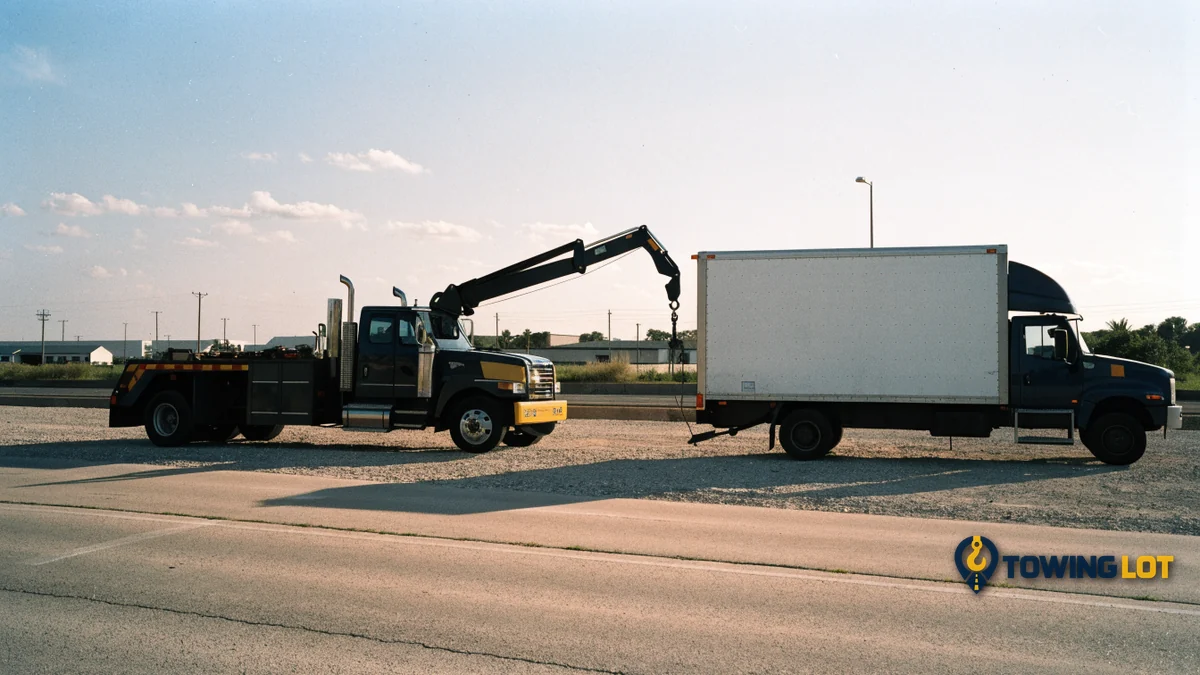
Box trucks and commercial vehicles require the correct wrecker rating, axle information, weight, cargo status, and driveline plan.
What to do right now
- Secure the scene
- tell the fleet manager
- identify cargo or hazardous materials
- do not attempt roadside rigging yourself.
Use the right equipment and method
A medium or heavy wrecker may underlift the axle, remove or secure a driveshaft, or use air and brake connections appropriate to the vehicle.
What to tell the dispatcher
- VIN or unit number
- GVWR
- loaded weight
- axle count
- height
- cargo
- damage
- destination.
A clear description helps the provider choose suitable equipment before leaving and reduces avoidable delays at the pickup point.
What can change the price
- Truck class
- labor
- driveline work
- recovery
- mileage
- tolls
- and permits.
Ask for an itemized estimate, included mileage, accepted payment methods, and any condition that could change the quote. The listed provider sets the price and arrival time.
Frequently asked questions
Heavy-Duty Towing for Box Trucks and Commercial Vehicles
Box trucks and commercial vehicles require the correct wrecker rating, axle information, weight, cargo status, and driveline plan.
What information should I give the towing company?
VIN or unit number; GVWR; loaded weight; axle count; height; cargo; damage; destination. Also explain any safety hazard or access restriction before the truck is dispatched.
What should I confirm before authorizing service?
Confirm the company name, truck or service type, destination, estimated arrival window, itemized price, mileage, payment method, and possible extra charges.
Find the right help
Compare heavy duty towing providers and call directly to confirm current coverage. You can also find towing near you or read RV Towing and Motorhome Recovery: What to Know.