Accident Towing in Miramar, FL: Collision Help
Find accident towing in Miramar, Florida, with local road guidance, collision safety steps, recovery questions, and nearby towing company listings.
Find local collision towing help
Compare 6 published towing providers based in Miramar. The linked search may also include providers that list the city as a service area or operate nearby. Call directly to confirm accident-recovery equipment, exact coverage, price, destination, and arrival time.
See Miramar towing companiesFirst steps after a collision in Miramar
Check for injuries and call 911 when anyone may be hurt, traffic is blocked, fluids are leaking, airbags deployed, or the scene is unsafe. Follow law-enforcement instructions. Do not walk into traffic to inspect damage or retrieve debris. If officials say the vehicles can move and your vehicle is clearly safe to steer, move to a protected location nearby; otherwise leave recovery to trained responders.
Photograph the vehicle and scene only from a safe place. Record the law-enforcement agency, incident number, tow company name, truck number when visible, destination, and storage-lot contact details. Remove essential medication, identification, garage openers, and valuables when authorities allow it.
Describe the exact crash location
When calling from Miramar, identify whether you are on or near Southwest 38th Avenue, Florida International University at I-75 Parking Road, Miramar Road and Douglas Road/Miramar High School. Useful local reference points include Miramar High School, Miramar Isles Park, Miramar Regional Park and Miramar Athletic Park. State the direction of travel, lane or shoulder, nearest intersection or exit, and whether police or fire-rescue remain on scene. These details help the provider plan a safe approach instead of circling the location or entering from the wrong direction.
Miramar is in Broward County. If the crash is near a municipal boundary, give the map pin and the responding agency so the company can confirm the correct service area and destination rules.
Why accident towing may need special equipment
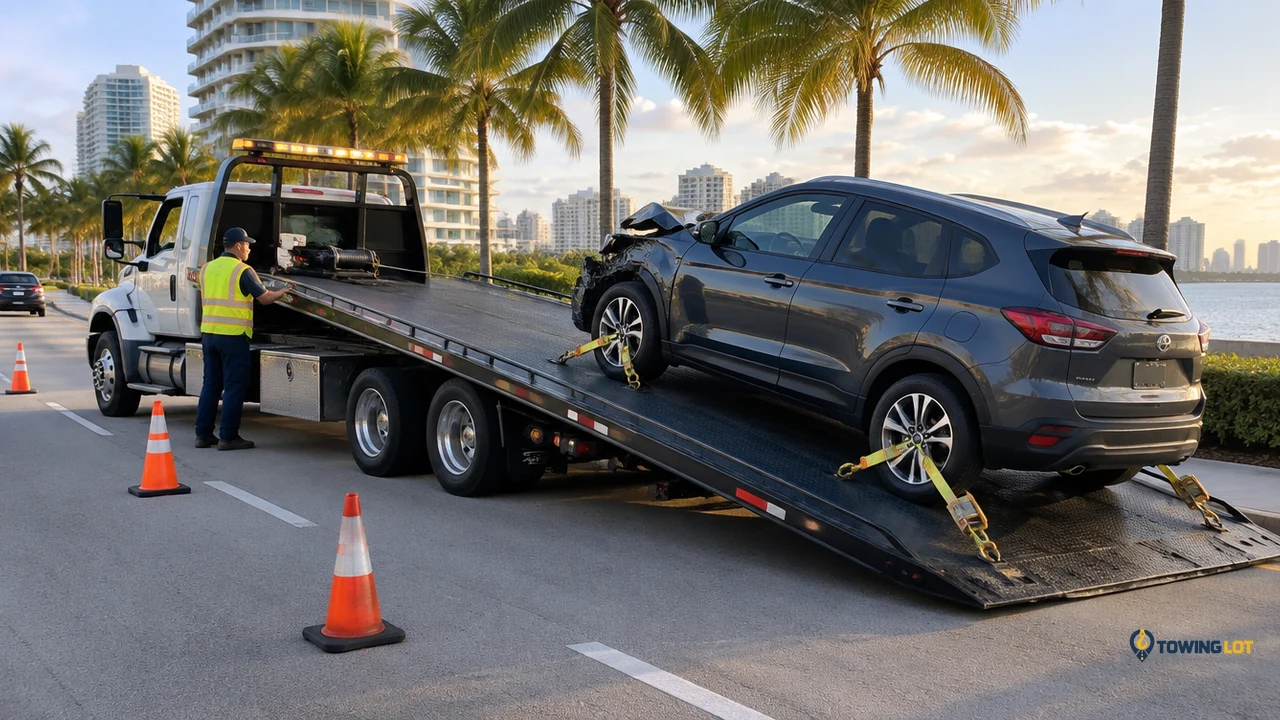
A collision can leave wheels pointed in different directions, suspension collapsed, glass and debris around the vehicle, or the transmission unable to shift. A flatbed, wheel-lift with dollies, skates, winches, or a recovery wrecker may be required. Vehicles in ditches, against barriers, on embankments, or at risk of rolling need controlled recovery before transport.
Tell the dispatcher about deployed airbags, leaking fluids, electric or hybrid propulsion, damaged battery areas, broken wheels, low ground clearance, and whether the keys are available. Never touch exposed orange high-voltage cables or a smoking, hot, or submerged electric vehicle.
Choose and confirm the destination
Depending on police direction and local rules, the vehicle may go to a repair facility, body shop, insurer-approved location, residence, or storage lot. Ask whether you may choose the destination and whether the receiving location is open. A police-directed tow can follow different release and storage procedures from an owner-requested tow.
Questions to ask before authorizing the tow
- Is the company handling an owner-requested tow or working under police direction?
- Where will the vehicle be taken, and can that destination receive it now?
- What recovery, cleanup, hookup, mileage, toll, storage, and administrative charges may apply?
- What identification or release documents will be needed later?
- Can the operator safely transport the vehicle with its present wheel, suspension, steering, and battery condition?
Can the car be driven after a minor crash?
Visible damage does not tell the whole story. Do not drive when a tire rubs, a wheel is bent, steering pulls, brakes feel different, warning lights appear, fluids leak, lights are broken, airbags deployed, or loose bodywork can enter traffic. When the vehicle condition is uncertain, towing it for an inspection is the safer choice.
Frequently asked questions
Can I choose the tow company after a crash in Miramar?
You can often request a company for an owner-arranged tow, but police may control scene clearance or use a rotation provider. Ask the responding officer what choices are available before the vehicle is moved.
What should I take from the vehicle?
When authorities say it is safe, take identification, insurance information, medication, essential personal items, keys, and valuables. Photograph the vehicle and ask where it will be stored.
Will insurance pay for accident towing?
Coverage depends on the policy, circumstances, authorization requirements, and destination. Contact the insurer, keep the invoice and incident details, and do not assume every recovery or storage charge is covered.
Towing companies based in Miramar